

Introduction
Rabbits are the most neglected pet in the UK. It's a sad truth that often surprises people, after all, they look like easy, low-maintenance companions. But this misconception is exactly the problem. Many well-meaning owners bring home a rabbit without understanding what these intelligent, sensitive animals actually need, leading to poor health, loneliness, and unnecessary suffering.
If you're a first-time rabbit owner, or thinking about becoming one, this guide is for you. The good news? Most of the common mistakes are completely avoidable. Let's walk through the key areas where new owners often go wrong: feeding, housing, social needs, and welfare.
1. Not Understanding What Rabbits Should Eat
What Can I Feed a Rabbit?
One of the most common questions new rabbit owners ask is: *what can I feed a rabbit? * The answer is simpler than you might think, but it's also where a lot of people go wrong.
A healthy rabbit diet looks like this:
- Hay: 80–90% of their diet, this is the single most important thing your rabbit eats
- Fresh leafy greens, such as romaine lettuce, kale, herbs like parsley and coriander, and dark leafy greens (avoid iceberg lettuce)
- Pellets, in small, measured amounts (around an egg cup full per day for an average-sized rabbit)
- Occasional treats, fresh fruit or rabbit-safe snacks, offered sparingly
Foods to avoid entirely include onions, garlic, avocado, chocolate, rhubarb, iceberg lettuce, and anything sugary or processed.
Why Hay Is Non-Negotiable
Hay isn't just a snack; it's the foundation of your rabbit's entire health.
Dental health: Rabbits' teeth grow continuously throughout their lives. Chewing hay grinds the teeth down naturally, preventing dangerous dental overgrowth and painful spurs that can cut into the cheeks and tongue.
Digestive health: A rabbit's gut is designed to be constantly moving. Hay provides the long-strand fibre needed to keep their digestive system functioning properly. Without it, rabbits can develop GI stasis, a life-threatening condition where the gut slows or stops entirely.
Weight management: High-fibre, low-calorie hay fills your rabbit up without packing on the pounds.
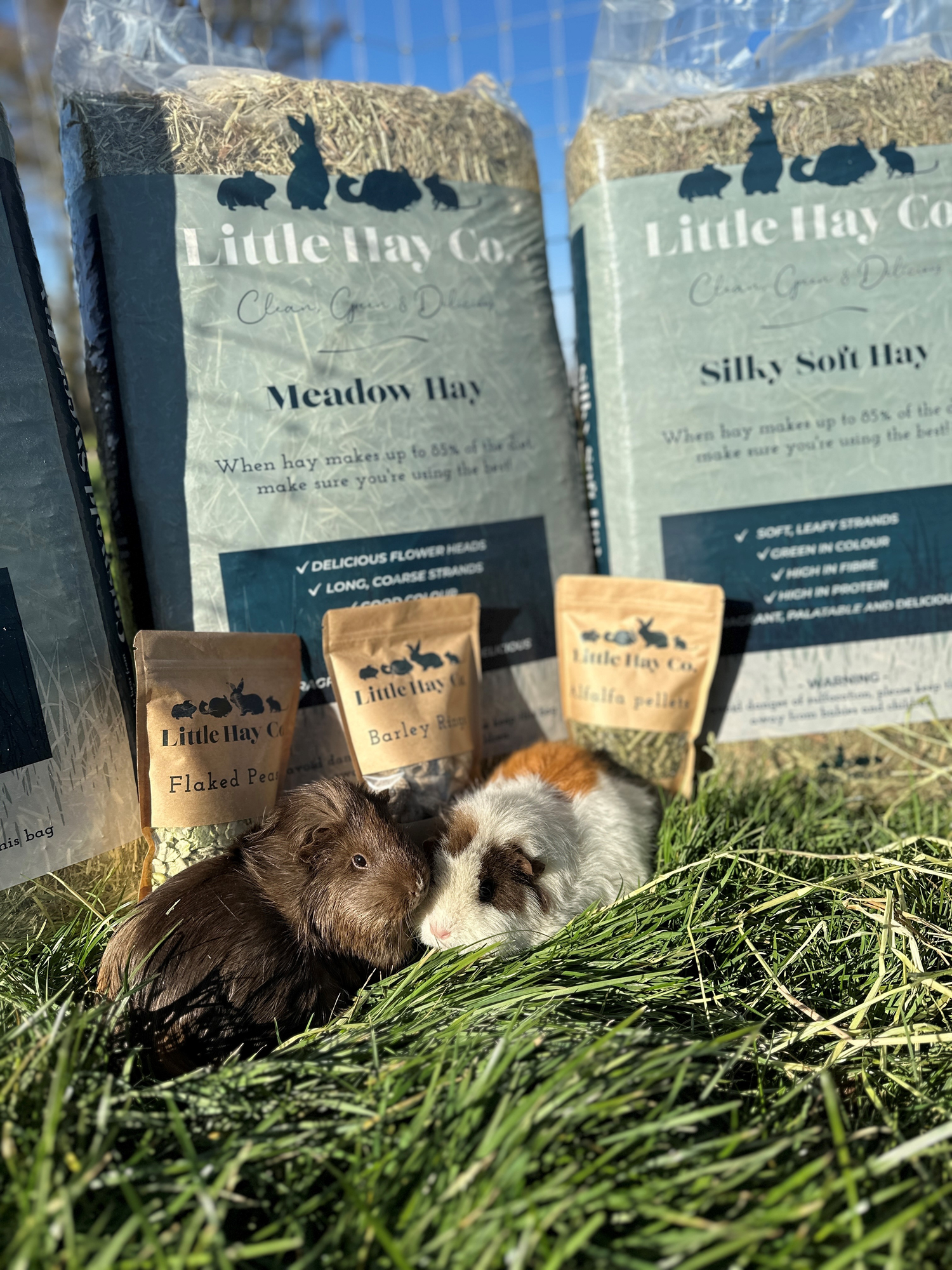
Little Hay Co.'s Meadow Hay is a brilliant everyday option, naturally high in fibre, dust-extracted, and grown to support exactly this kind of healthy, continuous munching.
Common mistake: Feeding too many pellets or treats instead of hay. Pellets are calorie-dense and low in fibre, they should complement hay, not replace it.
Chews like Dandelion Roots, Applewood Sticks, and Plantain Leaves tick two boxes at once: they help keep teeth worn down naturally and give your rabbit something engaging to focus on, all without being harsh on their digestive system
2. Feeding Too Much (Or Too Little)
How Often Should You Feed a Rabbit?
Unlike cats and dogs, rabbits aren't designed for set "meal times." They are grazers, meaning they need access to food (primarily hay) around the clock. Their gut needs to keep moving continuously and going even a few hours without eating can cause serious health complications.
How Many Times a Day Should I Feed My Rabbit?
Hay should be available 24/7, replenished daily so it stays fresh. Fresh greens can be offered once or twice a day, morning and evening works well for most owners. Pellets are best given once a day in a measured amount. Think of it less as scheduled feeding and more as constant hay access + daily supplementation.
Can You Overfeed a Rabbit?
Yes, and it's more common than you'd think. Overfeeding pellets or sugary treats is one of the leading causes of obesity in pet rabbits, which in turn causes joint problems, flystrike risk, and an inability to groom properly (including reaching their caecotrophs, the special droppings rabbits eat to absorb essential nutrients).
You can't really overfeed hay, it's the one food that can be offered freely. But treats should be genuinely occasional. If you want to give your rabbit something special, opt for something natural and rabbit-appropriate, like Strawberry Slices a wholesome, dried treat without nasty additives.
3. Buying the Wrong Size Home
What Size Hutch Does a Rabbit Need?
A hutch is not enough. Ask most first-time owners what size hutch a rabbit needs and they'll guess too small. The tiny hutches still sold in many pet shops are, frankly, inadequate for most rabbits and the welfare guidelines are clear.
According to the RWAF (Rabbit Welfare Association & Fund), the minimum recommended space for a rabbit is:
3m x 2m x 1m and that's a minimum, not an ideal, more space is always better! It needs to be accessible 24/7, not just for playtime. Rabbits should be able to take at least three consecutive hops, stand fully upright on their hind legs without their ears touching the roof, and stretch out fully in any direction.
The best setups combine a hutch with an attached run giving your rabbit protected sleeping space alongside room to move, explore, and express natural behaviours like digging and binkying (those joyful leaps and twists that tell you a rabbit is happy).
Why Small Hutches Cause Health and Behaviour Issues
A rabbit confined to a small hutch doesn't just get bored, it suffers in measurable, physical ways:
Muscle loss: Without room to move, rabbits lose muscle mass rapidly. This is particularly dangerous for their back and hindquarters, which can lead to spinal problems.
Boredom and frustration: Rabbits are intelligent animals. Confinement without stimulation leads to chronic stress.
Stress behaviours: Bar chewing, repetitive circling, thumping, and aggression are all signs of a rabbit living in too small a space. These aren't personality quirks, they're distress signals.
Common mistake: Choosing a hutch based on what fits the garden or the budget, rather than what the rabbit actually needs.
4. Forgetting That Rabbits Are Social Animals
Do Pet Rabbits Get Lonely?
Yes, deeply so. Rabbits are highly social animals that, in the wild, live in large groups. A solitary rabbit in a hutch at the bottom of the garden is one of the saddest and most common welfare situations in the UK. Ideally, rabbits should be kept in bonded pairs, typically a neutered male and a spayed female, introduced carefully. The companionship of another rabbit provides mental stimulation, warmth, grooming, and security that no human interaction can fully replace (however devoted an owner you are).
Signs of Loneliness in Rabbits
Loneliness in rabbits is not always obvious, but here's what to watch for:
Lethargy or depression, a rabbit that sits hunched, barely moving, and shows little interest in its surroundings Destructive behaviour, excessive chewing, digging, or tearing at bedding. Overgrooming, barbering (pulling out their own fur) or obsessively grooming a single spot
If you do keep a single rabbit, you'll need to commit to significant daily interaction, free-roaming time, and enrichment to partially compensate, but the honest truth is that another rabbit is almost always the better answer.
Common mistake: Keeping a single rabbit, assuming they'll be fine on their own or that they prefer solitude.
5. Not Considering Rescue Before Buying
Why You Should Consider Rescue First
The UK's rabbit rescue centres are overflowing. Many of those rabbits are there because of the very mistakes listed in this blog, owners who didn't understand what they were taking on, pets given as impulse buys or Easter gifts, rabbits that outgrew their welcome or their hutch.
Choosing to rescue a rabbit means:
- Many rabbits already vaccinated and neutered, saving you significant upfront vet costs
- Known personality: rescue centres get to know their animals and can help match you with a rabbit that suits your lifestyle
- Expert support: reputable rescues don't just hand over an animal; they provide advice, follow-up, and ongoing guidance
Support Animals in Need: Rescue a Rabbit
Before you visit a pet shop or a breeder, please consider contacting your local rabbit rescue or checking the national databases. Organisations like the RWAF and the RSPCA maintain lists of rabbits in need of homes across the UK.
Responsible rabbit ownership starts before you even bring a rabbit home, it starts with where you choose to get them from.
Conclusion:
The fact that you're reading this means you're taking rabbit ownership seriously. That alone puts you ahead of many first-time owners.
To quickly recap the key takeaways:
- Hay, hay, and more hay, it should make up the vast majority of your rabbit's diet, available at all times
- Rabbits graze constantly, forget set meal times; think continuous hay access with daily fresh greens and measured pellets
- Size matters, your rabbit needs far more space than most hutches provide; always pair a hutch with a run
- Rabbits need company, a bonded pair is almost always happier than a solitary rabbit
- Rescue first, give a rabbit in need a second chance before buying from a shop
Here's to happy, healthy, well-fed rabbits, and well-informed owners who give them the life they deserve.